


Rotations
Echo
Rotations · Echo · Workflows
The six you will reach for
The same cards as the library below, put where they are asked for fifty times a week.
TTE Performance
How it goes
- Arrive at the echo lab and identify your sonographer and room.
- Stay with the same sonographer through the day where you can.
- Watch the acquisition sequence before you touch the probe.
- Practise scanning after the exam is complete.
- Learn the machine: the knobs, gain, depth and Doppler optimization.
- Help build the report.
- Note any interesting pathology as you go.
- Carry your questions to the reader of the day in the afternoon.
Echo Pre-Read
How it goes
- Open the study queue.
- Review the indication, the history and any prior studies.
- Interpret systematically: structure, function, valves, Doppler.
- Draft a preliminary impression.
- Identify any critical findings before you move on.
- Discuss the study with the reader of the day.
- Revise your read on the feedback.
- Keep going on incoming studies through the afternoon.
Stress Echo
How it goes
- Review the indication and the contraindications.
- Review the baseline ECG.
- Supervise where supervision is required.
- Interpret the resting and stress ECGs preliminarily.
- Assess the images and the ischemic response with the attending.
- Escalate a markedly abnormal finding immediately — do not wait for the readout.
TEE Workflow
How it goes
- Review the request for appropriateness.
- Review the chart and any prior studies.
- Check the contraindications.
- Discuss the study with the supervising faculty.
- Consent the patient.
- Work through the sedation pathway where sedation applies.
- Perform the study under direct supervision.
- Communicate the result to the patient or family and to the referring clinician.
- Return to the rest of the echo duties when the study is done.
Critical Result Communication
How it goes
- Recognize it as critical — tamponade, severe new valvular disease, a markedly abnormal stress echo, unexpected severe aortic stenosis, or a major thrombus or vegetation where it is urgent.
- Identify the clinician responsible for the patient.
- Call or text that provider. Do not leave it in the report.
- Document that the communication happened.
Contrast / Bubble
How it goes
- Know the indications for ultrasound contrast and for agitated saline, and which of the two the study needs.
- Help prepare and administer it when nursing is not available.
- Know the safety basics before you do.
- Bring the contrast findings into the learning discussion at readout.
Image Acquisition & Performance
The half of the rotation that happens with a probe in your hand.
TTE performance workflowThe day with your sonographer, in order
How it goes
- Arrive at the echo lab and identify your sonographer and room.
- Stay with the same sonographer through the day where you can.
- Watch the acquisition sequence before you touch the probe.
- Practise scanning after the exam is complete.
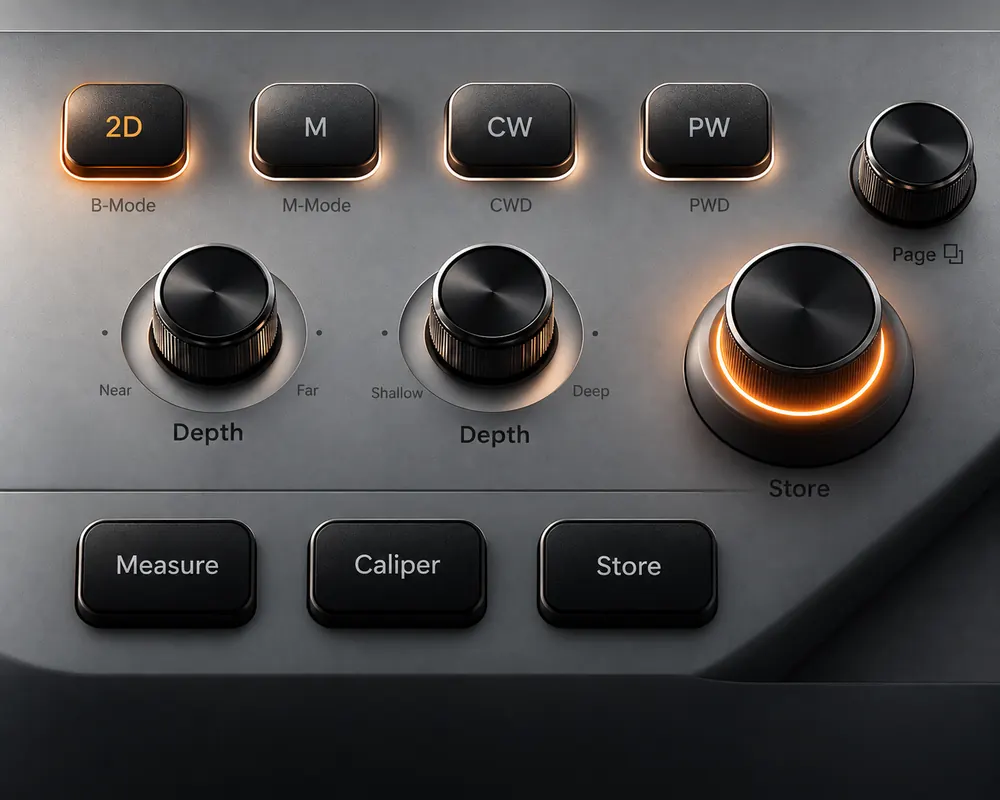
- Learn the machine: the knobs, gain, depth and Doppler optimization.
- Help build the report.
- Note any interesting pathology as you go.
- Carry your questions to the reader of the day in the afternoon.
Standard TTE scanning sequenceUnverified
The scanning sequence this lab actually teaches, and whether it differs from the published standard protocol.
Answered by: Echo lab — sonographers and the lab director
Working with the sonographersUnverified
How a fellow is introduced to the lab, who assigns the room, and what the sonographers expect of a fellow who wants to scan.
Answered by: Echo lab
Common view checklistUnverified
The lab’s own view checklist, and what each view is expected to answer.
Answered by: Echo lab
Optimizing windows and DopplerUnverified
The machine makes and the knobology a fellow is expected to learn on them. Nothing here should describe a machine this lab does not have.
Answered by: Echo lab
Interpretation & Reading
The other half, and the whole of an F2 or F3 morning.
Echo pre-read workflowQueue to impression to readout
How it goes
- Open the study queue.
- Review the indication, the history and any prior studies.
- Interpret systematically: structure, function, valves, Doppler.
- Draft a preliminary impression.
- Identify any critical findings before you move on.
- Discuss the study with the reader of the day.
- Revise your read on the feedback.
- Keep going on incoming studies through the afternoon.
Structuring a fellow readUnverified
The preliminary-report format the readers want, and whether a fellow read is entered in the reading system or held for the readout.
Answered by: Program
Flagging an urgent abnormalityUnverified
How a fellow flags something urgent inside the reading workflow, as distinct from telephoning the ordering team — the escalation call itself is stated in Critical Result Communication.
Answered by: Program
Reviewing with the attendingUnverified
How each reader prefers to be reached to arrange side-by-side reading, and when. This is per-attending and belongs on the Attendings page rather than in a second copy here.
Answered by: Contributed by fellows, reviewed by the program
Incorporating attending feedbackUnverified
Whether corrections to a fellow read are recorded anywhere a fellow can review them later, or are verbal only.
Answered by: Program
Procedures & Stress
TEE, the stress lab, and the agitated-saline syringe.
TEE workflowAppropriateness to result
How it goes
- Review the request for appropriateness.
- Review the chart and any prior studies.
- Check the contraindications.
- Discuss the study with the supervising faculty.
- Consent the patient.
- Work through the sedation pathway where sedation applies.
- Perform the study under direct supervision.
- Communicate the result to the patient or family and to the referring clinician.
- Return to the rest of the echo duties when the study is done.
Stress echo workflowSupervision and the ischemic response
How it goes
- Review the indication and the contraindications.
- Review the baseline ECG.
- Supervise where supervision is required.
- Interpret the resting and stress ECGs preliminarily.
- Assess the images and the ischemic response with the attending.
- Escalate a markedly abnormal finding immediately — do not wait for the readout.
Stress echo supervision checklistUnverified
What local supervision requires: which studies a fellow may supervise, which need an attending in the room, and who is called when one is stopped early.
Answered by: Program
Resting and stress ECG interpretation supportUnverified
Where the preliminary ECG interpretation is recorded, and whether it counts toward the fellowship-wide ECG requirement.
Answered by: Program
Contrast and agitated saline workflowIndications, preparation, safety
How it goes
- Know the indications for ultrasound contrast and for agitated saline, and which of the two the study needs.
- Help prepare and administer it when nursing is not available.
- Know the safety basics before you do.
- Bring the contrast findings into the learning discussion at readout.
Communication & Safety
Everything that ends in a phone call.
Critical result escalationWhat counts, and who to reach
How it goes
- Recognize it as critical — tamponade, severe new valvular disease, a markedly abnormal stress echo, unexpected severe aortic stenosis, or a major thrombus or vegetation where it is urgent.
- Identify the clinician responsible for the patient.
- Call or text that provider. Do not leave it in the report.
- Document that the communication happened.
Patient symptoms and study complicationsUnverified
What a fellow does when a patient becomes symptomatic in the echo lab or during a TEE or stress study: who is called, and where in the building help comes from.
Answered by: Program
When to contact the ordering teamUnverified
Which findings the program wants telephoned rather than reported, beyond the critical list, and whether that differs for an outpatient study.
Answered by: Program
Documenting that the communication happenedUnverified
Where a critical-result call is documented — the reading system, a Cerner note, or both — and the exact template or SmartPhrase name if one exists.
Answered by: Program
Logistics & Documentation
Counting the work, and the conference you are assigned.
Tracking your numbersUnverified
Whether TTE, TEE and stress counts are logged in MedHub, in the reading system, or by hand — and what a fellow is expected to reconcile them against.
Answered by: Program
Conference expectationsUnverified
Which conferences an Echo fellow is expected at, and whether the rotation changes the usual attendance.
Answered by: Program
Preparing your assigned echo conferenceUnverified
How the echo conference is assigned, how far ahead, what format is expected, and who reviews the case selection.
Answered by: Program
Still needed from the program
Listed rather than guessed. These are the facts this page cannot answer.
- Reading softwareWhich system the study queue and the pre-read live in — IntelliSpace, Fuji PACS, PowerScribe or something else — and the login workflow. §04’s pre-read sequence starts by opening the queue and nothing here names it.
- Fellow readWhether a fellow’s preliminary interpretation is entered in the reading system or held for the readout, and the format the readers want it in.
- Stress supervisionThe local supervision requirement for stress echo: which studies a fellow may supervise, which need an attending present, and who is called when one is stopped early. §04 says "supervise when required" and does not say when that is.
- TEE sedation & consentThe local sedation pathway and consent process for TEE — who sedates, which order set, and what the fellow is responsible for. §04 states the sequence and the local specifics are not in it.
- ContrastWhich ultrasound contrast agent this lab uses, how it is prepared, and the local safety checks — including what a fellow may and may not administer when nursing is unavailable. No dose or concentration is anywhere in this repository and none should be added without pharmacy.
- Documenting a callWhere a critical-result telephone call is documented, and the exact Cerner or reading-system template or SmartPhrase name if one exists.
- Echo conferenceHow the fellow’s assigned echo conference is allocated, how far ahead, the expected format, and who reviews the case selection.
Last updated 2026-09-21 · Program, Echo Work Guide specification, 2026-09-21
These guides are maintained by the fellowship. Sign in to suggest a workflow, propose an edit, or report something out of date.